Questions? Email us at primarycare@praxushealth.ca
Early detection matters.
Lung cancer accounts for nearly 1 in 4 cancer deaths in Canada — more than any other cancer.
Early detection improves survival outcomes and reduces the burden of late-stage treatment costs.
Primary care providers are often the first point of contact for lung cancer screening conversations. They play a critical role in identifying eligible patients, supporting follow-up on screening results, and guiding next steps toward early treatment.
Unlike broad age-based screening programs, lung cancer screening targets individuals at highest risk based on age and smoking history.
Because eligibility relies on these precise factors, primary care teams play a vital role in identifying qualifying patients. Proactive, patient-focused conversations ensure high-risk individuals receive timely screening — driving earlier detection and improving survival outcomes.
Each province sets its own eligibility criteria, which typically include age and smoking history. Explore the map to find out what’s available in your province.
Click on a province below to access provincial lung cancer screening eligibility criteria.
Supporting your patients with lung cancer screening starts with the right tools.
We’ve developed the following resources to help your primary care team assess tobacco exposure and streamline screening referrals.
Accurately Assess Tobacco Exposure
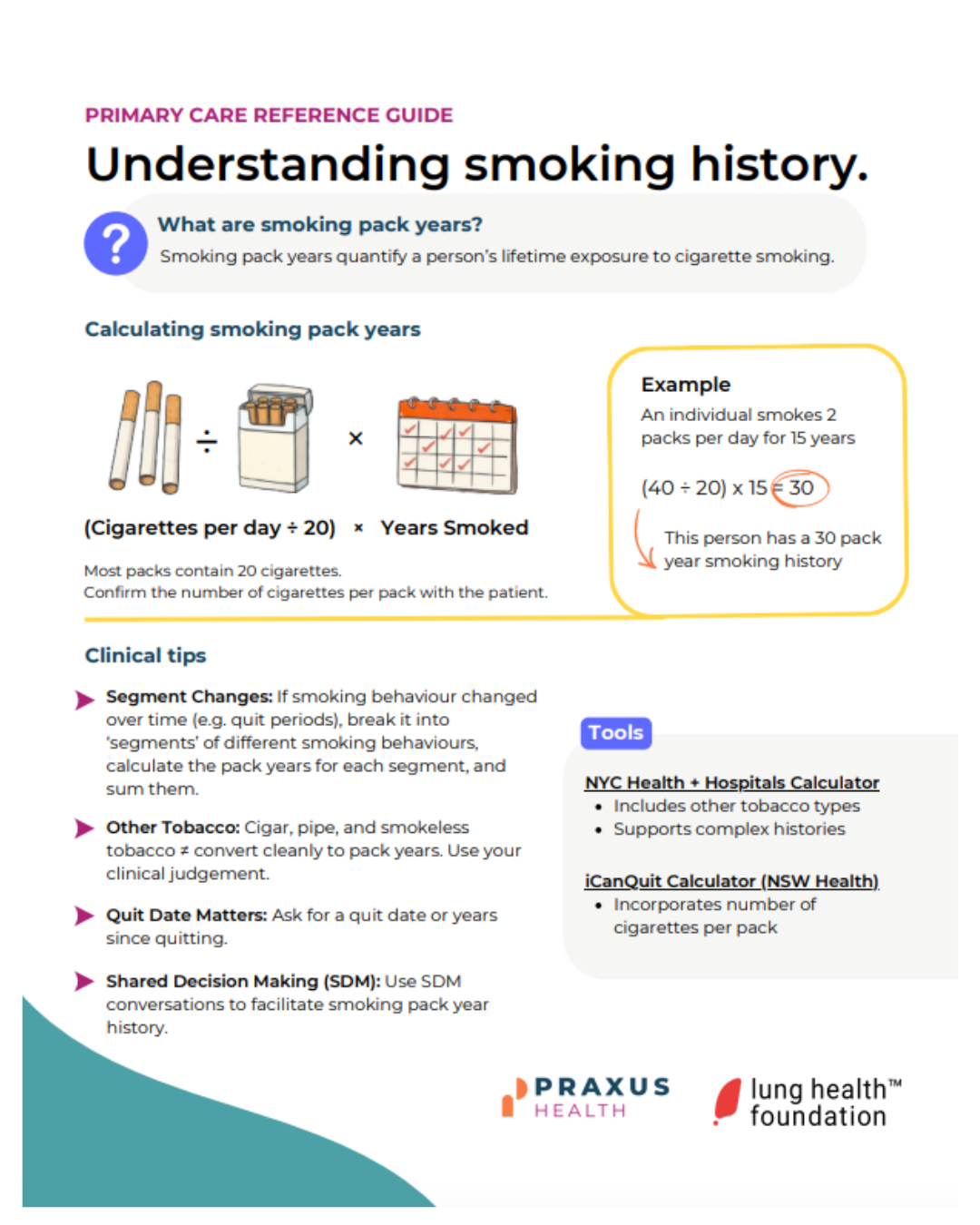
An evidence-based guide to help primary care teams accurately assess tobacco exposure, support shared decision-making, and streamline lung cancer screening referrals — ensuring equitable care for every patient.
Know Who Qualifies. Guide Conversations With Confidence.
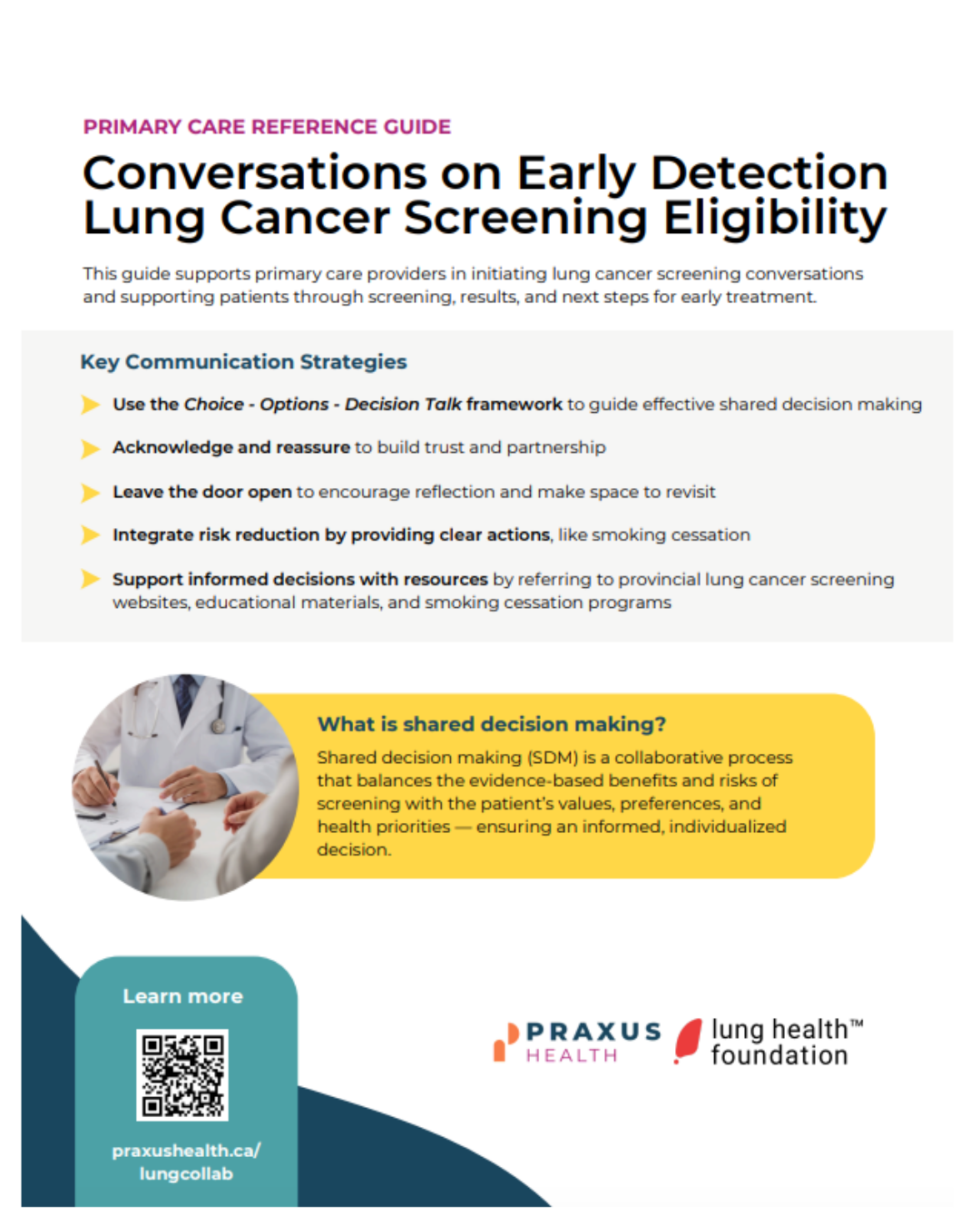
Once you’ve identified a high-risk patient, what comes next? This reference guide walks primary care teams through the shared decision-making process for lung cancer screening eligibility, with practical conversation aids for both eligible and ineligible patients.
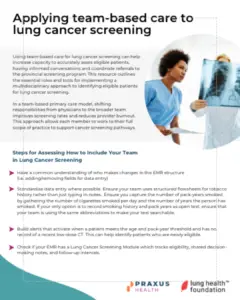
This resource outlines the essential roles and tools for implementing a multidisciplinary approach to identifying eligible patients for lung cancer screening.
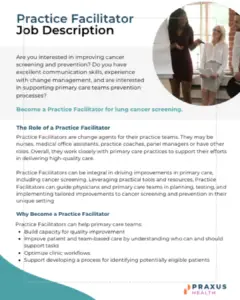
Practice Facilitators can be integral in driving improvements in primary care, including cancer screening. This resource provides an overview of key accountabilities for Practice Facilitator roles.
Smoking is the leading risk factor for lung cancer.
Free, confidential support is available to all Canadians through the national quitline at 1-866-366-3667, where patients can connect with a coach in their region.
Provincial and territorial resources are also available.